Arabian Jasmine Care: Growing Jasminum Sambac in Pots
Updated · Sproutly
Arabian jasmine needs a bright growing position, warmth and a moist root ball that drains freely. A pot lets you move this fragrant shrub under protection when the weather cools. Indoors, start with the window: a plant can keep its leaves in conditions that produce few flowers.
Check for Jasminum sambac on the label
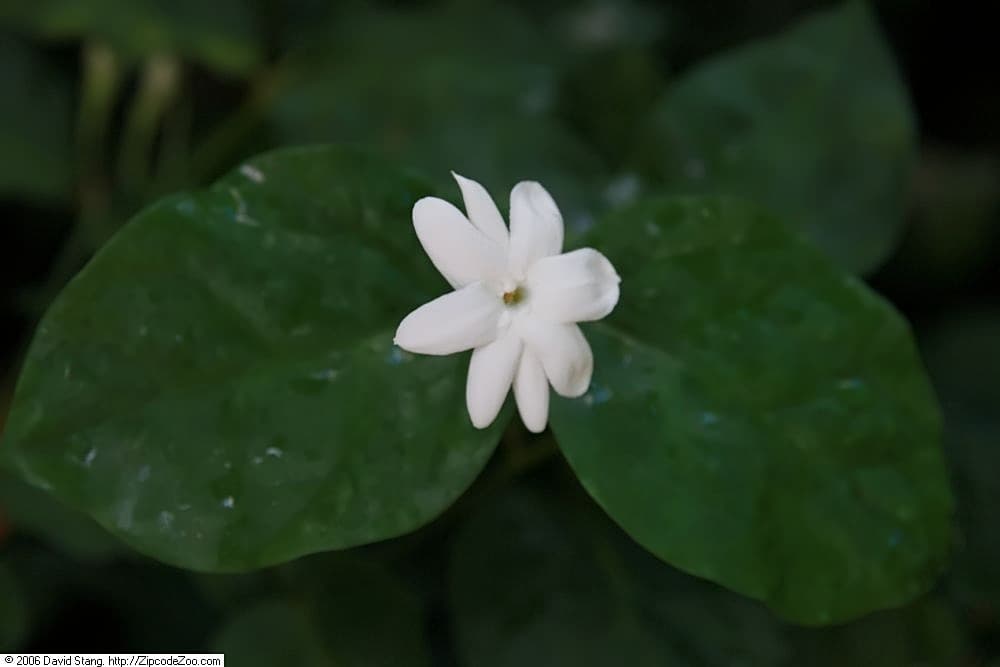
A flowering Jasminum sambac photographed at the United States Botanic Garden. Flower form varies between cultivars; keep the botanical label when comparing plants.
Photo: David J. Stang / Wikimedia Commons. CC BY-SA 4.0. Resized for display.

Arabian jasmine is Jasminum sambac, an evergreen shrub with stems that can scramble over a support. Its white flowers have a strong fragrance. It is also sold as sambac jasmine; Indiana University describes its use to scent tea. Gardenia jasminoides, often called cape jasmine, is a different plant with a separate care guide. A listing called “Arabian gardenia” needs a botanical-name check.
Flower form varies. NParks describes ‘Maid of Orleans’ as single-flowered and distinguishes it from double-flowered ‘Arabian Nights’. A double bloom does not identify a gardenia. Keep the cultivar label when comparing growth or flowers.
Give the leaves useful light and warmth
New York Botanical Garden recommends bright light with some direct east- or west-window sun for indoor jasmine. Move the pot close enough that light reaches the leaves, rather than choosing a bright-looking room with the plant far from its window.
| Position | Starting point | Check next |
|---|---|---|
| Indoor window | Bright light with some gentle direct sun | Curtains, roof overhangs and nearby buildings can substantially change the exposure. |
| Hot greenhouse or strong summer window | Protect from hot sun | RHS recommends shading harsh sun under glass. Move a formerly shaded plant into stronger light gradually. |
| Summer patio | A sheltered position with sun or partial shade | Watch leaf condition and pot moisture as exposure changes; a windy pot can dry much faster than an indoor one. |
| Few flowers in winter | Check light and night temperature | NYBG specifically says J. sambac prefers nights above 60°F / about 16°C. |
A cool-night flowering routine for another jasmine may be unsuitable here. Measure near the plant after dark if a window feels chilly. Use the indoor lighting guide to compare window exposure and supplemental light before increasing fertilizer.
Water the root ball and empty the outer pot
Use a container with drainage holes and a potting mix that holds moisture while allowing excess water to escape. A heavy garden soil in a small indoor pot can make that balance difficult. Choose room for the existing roots and their next growth, rather than a large volume of unused wet mix. Illinois Extension explains why drainage holes and emptied saucers matter.
- Check below the surface. Feel the mix and compare the pot’s weight. The surface can dry while the center remains wet.
- Water as the mix starts to dry. Moisten the root ball evenly, allow runoff, and empty the saucer or decorative cachepot. Avoid repeatedly letting the plant wilt.
- Check sooner after a move outdoors. Sun, wind and new growth change demand. A calendar reminder is a prompt to inspect, not an instruction to water a wet pot.
- Reduce watering when growth and drying slow. Continue checking the roots’ moisture; reduced winter watering does not mean leaving the plant bone dry.
NYBG’s indoor guidance emphasizes moisture, while NParks warns against soggy conditions. Both point toward a draining root zone, with the interval adjusted to your pot. Illinois Extension’s container-watering guidance supports checking moisture rather than relying on one interval. If a wet plant stays limp, use the root-check guide before adding more water.
RHS recommends low-nitrogen fertilizer during active growth. Follow the product’s dilution and account for fertilizer already in fresh mix. Feeding is not a substitute for light or healthy roots.
Train a shrub or a small climber
For a trellis, guide flexible stems onto a stable support with loose ties. Check ties as stems thicken. Without support, Arabian jasmine can form a spreading shrub; its final shape depends on the cultivar and pruning. Missouri Botanical Garden describes both habits.
Remove dead or damaged stems, then shorten selected long shoots to shape the plant. Leave space between branches so leaves receive light. NParks notes that pruning ‘Maid of Orleans’ encourages new shoots and flowering. Avoid repeatedly removing every growing tip once buds are developing: shape the plant with its next flower flush in mind.
For a container, plan the finished height around the window and support you can provide. Continually folding long shoots into a dark, crowded knot makes it harder to inspect leaves or water the pot. Use clean secateurs and make small adjustments before the plant becomes difficult to move.
Plan the move indoors before cold weather
Missouri Botanical Garden lists USDA zones 9–11 and recommends bringing containers inside before the first autumn frost in colder climates. RHS gives an H2 rating under UK conditions: protection from freezing is needed. These are different rating systems, and neither promises that a small exposed pot will tolerate every cold night.
| Situation | Practical next step |
|---|---|
| Patio plant with colder nights approaching | Prepare a bright indoor position, inspect leaves and stems for pests, and move it before frost. |
| Warm indoor room with winter growth | Keep the brightest suitable position and water according to actual drying. |
| Cooler protected room with slow growth | Expect less demand for water. Check temperature near the leaves, not only at the room thermostat. |
| Permanent outdoor planting in a mild climate | Check local performance and regional planting advice before putting it in the ground. |
In Florida, UF/IFAS currently assesses Arabian jasmine as a high invasion risk and does not recommend it. A suitable winter climate alone is not a reason to plant it in the landscape. Local native planting advice can help you choose an alternative.
Separate flowering problems from root or pest trouble
| What you see | Check first | What to do |
|---|---|---|
| Healthy leaves, few buds | Light reaching the plant, cold nights and repeated trimming | Improve the growing position and allow new shoots to develop before changing feed. |
| Wilt with a light, dry pot | Whether the root ball has dried unevenly | Water thoroughly and drain. Watch whether firmness returns. |
| Wilt or yellow leaves with persistently wet mix | Drainage, standing runoff and root condition | Empty collected water and inspect a declining root ball; yellowing alone does not identify a nutrient deficiency. |
| Sticky leaves, cottony patches or fine webbing | Stems, leaf undersides and tender new growth | Isolate the plant and identify the pest before choosing a treatment. |
RHS lists aphids, scale, mealybugs and glasshouse spider mites as possible problems. The pest identifier helps compare their signs. Inspect a patio plant before bringing it beside other houseplants; a change of room does not remove an infestation.
Frequently Asked Questions
Yes, with bright light, a freely draining pot and warmth. Give it a place near a suitable window; a plant kept well back in a dim room may produce few flowers.
Yes. Choose a pot with drainage and enough room for its roots. Empty runoff, check moisture before watering, and use a support if you want to train the stems upward.
A trellis is useful for a climbing shape. Tie stems loosely to it and adjust ties as they grow. You can also prune the plant as a shrub.
Missouri Botanical Garden lists USDA zones 9–11. Check local winter conditions and planting guidance; for a movable container, bring it under protection before frost rather than relying on the zone number alone.
Arabian jasmine is Jasminum sambac, whose flowers are used to scent tea. Gardenia jasminoides is a different plant. Confirm the botanical name on a nursery label rather than relying on “jasmine” or “gardenia” in a common name.
Start with usable light, night temperature and whether recent pruning removed developing tips. Check moisture and root health too. Extra fertilizer cannot compensate for a poor growing position.
Sources & further reading
- RHS: Jasminum sambac cultivation, hardiness and pests
- New York Botanical Garden: indoor jasmine light, water and temperature
- Missouri Botanical Garden: Arabian jasmine growth, zones and containers
- NParks: Jasminum sambac ‘Maid of Orleans’ and its cultivation
- Indiana University Biology Greenhouse: Arabian jasmine identity and flowers
- Illinois Extension: checking and watering container plants
- Illinois Extension: container drainage and saucers
- UF/IFAS: Arabian jasmine regional invasion assessment
This guide combines the references above with practical decision steps for home growers. Conditions and cultivars vary. How we approach plant guidance · Suggest a correction