Common Houseplant Diseases — Pictures & Symptoms
Last Updated: September 2026
Start Here
Match the visible symptom, then check the plant and its growing conditions. Powdery mildew, leaf spot and root rot need different responses. Sunburn, pests and watering stress can resemble infection, so a similar-looking photo is a clue rather than a confirmed diagnosis.
Houseplant Disease Pictures: What to Look For
Powdery mildew on begonia
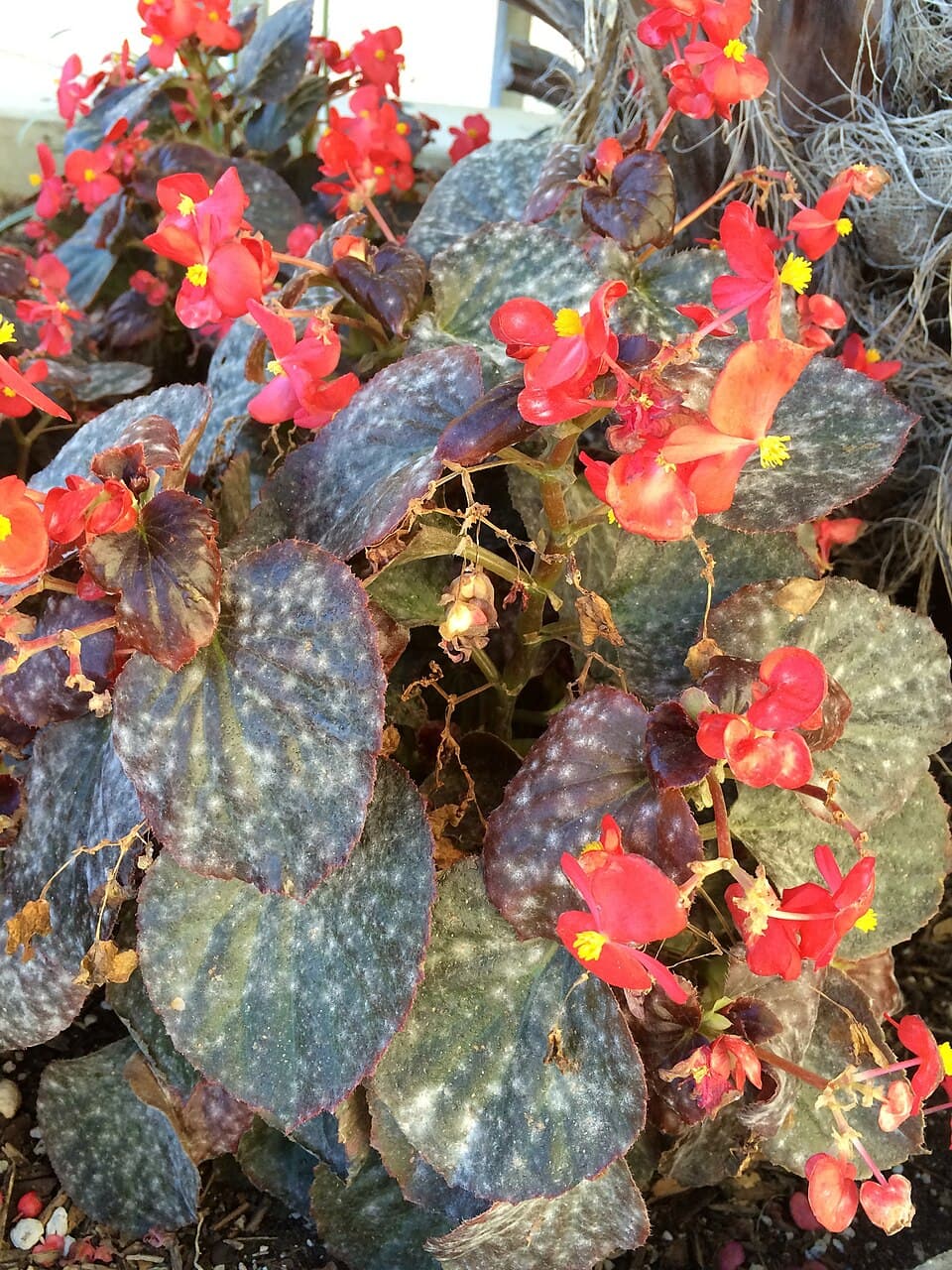
Documented powdery mildew on begonia. Compare the pale patches across several leaves; do not assume every white mark on a houseplant is mildew.
Photo: Scot Nelson / Wikimedia Commons. CC0 1.0. Resized for display.
.jpg)
Look for: irregular powdery growth on leaves, stems or buds. Dust, hard-water deposits and some pests can resemble it. Powdery mildew affects susceptible hosts; the same appearance on a different plant does not identify the organism.
Separate affected plants, give them more space and remove badly infected tissue. If treatment is needed, choose a product labeled for that plant, disease and indoor use. Existing damage will not become healthy tissue again. University of Minnesota Extension explains the symptoms and management.
Bacterial blight on anthurium
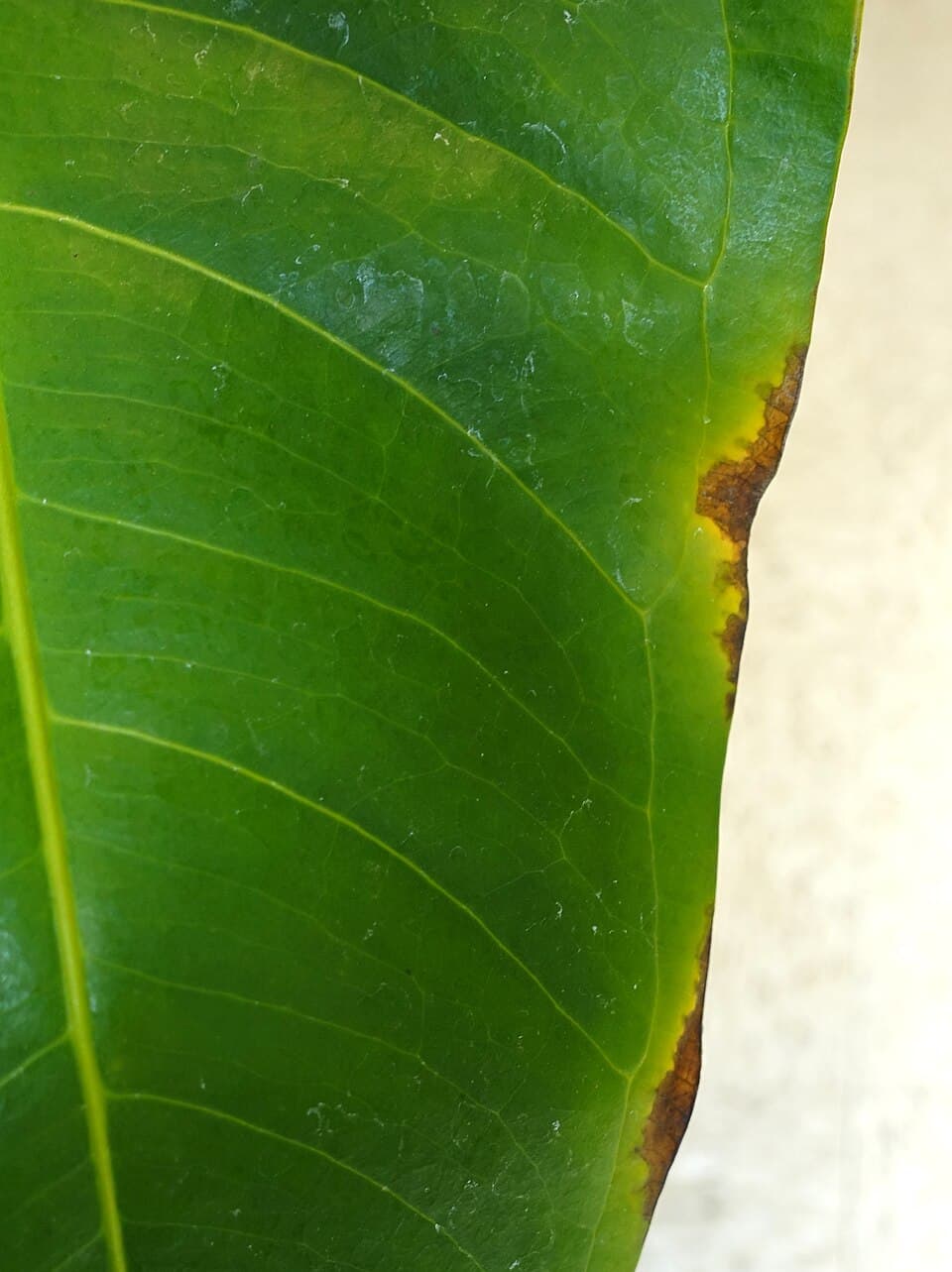
Documented anthurium blight, identified by plant pathologist Scot Nelson as Xanthomonas infection. Yellow-edged lesions alone cannot distinguish bacterial disease from other damage.
Photo: Scot Nelson / Wikimedia Commons. CC0 1.0. Resized for display.
.jpg)
Look for: where lesions begin and whether new ones appear. Fungal and bacterial spots can both be brown, dark or yellow-edged. Sun scorch, cold damage and pest feeding are other possibilities. Photograph changes over several days and keep the plant label with your notes.
Keep foliage dry, avoid splashing between pots and clean cutting tools between plants. A fungicide will not solve every leaf spot; ask a local plant diagnostic service about persistent or spreading damage before choosing a treatment.
Indoor Plant Diseases and Lookalikes Chart
| Visible symptom | Possible explanation | Next check |
|---|---|---|
| White or gray patches | Powdery mildew; dust or mineral residue can look similar | Compare with the reference photo and monitor new growth. |
| Expanding brown spots or yellow-edged lesions | Leaf spot or blight; also check physical damage and pests | Separate the plant and keep water off its leaves. |
| Wilting while the pot remains wet | Root damage, including root rot | Inspect drainage and root texture before watering again. |
| Gray fuzzy growth on dying flowers or leaves | Gray mold (Botrytis) is one possibility | Remove decaying tissue and improve spacing and airflow. |
| Pale speckles and fine webbing | Spider mites: a pest, not a fungal disease | Inspect leaf undersides with a magnifier. |
| Tiny flies around the pot | Fungus gnats: a pest associated with damp mix | Use the fungus gnat guide to check adults and larvae. |
For insect photos and treatment steps, see fungus gnats and spider mites. To separate the common signs first, use which houseplant pest is this.
Root Rot: Check Texture, Not Just Color
Yellow leaves and wilting in wet mix justify a root check, but they do not prove infection. Root problems can involve oxygen-starved tissue and pathogens, including fungi and water molds. Healthy roots are not always white; some are naturally tan or brown.
Gently slide the root ball from its pot. Soft, collapsing roots or an outer layer that slips away are more useful warning signs than color alone. University of Minnesota's diagnostic guide describes root-rot symptoms and the need for laboratory identification.
Remove decayed tissue with clean tools while preserving firm roots, then use a clean pot with drainage and fresh mix suited to the plant. Adjust watering to the remaining roots and drying rate. Follow the overwatered plant rescue guide for the next steps.
What to Do Before Treating a Sick Plant
- Move it away from other plants while you check for pests or spreading lesions.
- Record the botanical name, recent watering, light changes and when damage began. Photograph the whole plant, both leaf surfaces and the pot.
- Check soil moisture and drainage. Inspect roots if wet-soil wilting suggests damage below the surface.
- Choose a response that matches the evidence. Avoid combining several sprays or changing every care condition at once.
- Track new growth. Old brown spots remain even after the original problem is corrected.
Use our Plant Symptom Checker to organize the clues. Photo tools can help compare patterns, but cannot reliably identify a pathogen from an image alone.
More References and Care Help
Frequently Asked Questions
A picture can narrow down possibilities, but it rarely confirms the cause. Compare the plant species, where damage starts, whether it spreads, soil moisture and root condition. Fungal and bacterial leaf spots can overlap in appearance; a plant diagnostic laboratory may be needed.
Recovery depends on how much healthy root and stem tissue remains. Remove soft, decaying roots with clean tools, use fresh suitable potting mix and fix drainage and watering. Firm brown roots may be healthy: color alone is not a reason to remove them.
Leaf spot or blight is one possibility, but a yellow halo does not identify a particular pathogen. Check for spreading lesions, wet foliage, pests and recent sun or cold exposure before treating.
Powdery mildew often forms irregular white or gray patches on susceptible plants. Dust and dried mineral deposits can look similar. Wiping alone is not a definitive test: check whether patches spread or recur and compare stems, buds and new leaves.
No. They are insects associated with damp potting mix. Adults are usually a nuisance; larvae feed on fungi and organic matter and can damage fine roots, especially in seedlings.
Remove badly affected leaves when infection is suspected, using clean tools and bagging the waste. Avoid stripping a plant of all its foliage solely because of a few uncertain spots. Keep it separate while you monitor new growth.
Let Sproutly simplify plant care.
Identify plants, understand likely issues, and get care schedules that fit your home.