Elephant Bush Care (Portulacaria afra)
Last Updated: September 2026
TL;DR
Portulacaria afra (elephant bush or mini jade) is a tough, fast-growing succulent that thrives on bright light and benign neglect. It's not a true jade plant — that's Crassula ovata, a different genus entirely. Give it full sun, gritty well-draining soil, and water only when the soil is bone dry. The #1 killer is overwatering. If your plant is dropping leaves, check for wrinkled foliage (underwatering) versus mushy stems (overwatering) — the treatment is very different.
| Factor | Requirement |
|---|---|
| Botanical Name | Portulacaria afra |
| Common Names | Elephant bush, dwarf jade, mini jade, spekboom |
| Light | Full sun to bright indirect — tolerates direct sun well |
| Watering | Let soil dry completely between waterings |
| Humidity | Low — thrives in dry air, no misting needed |
| Temperature | 65-80°F (18-27°C); tolerates heat well, protect from frost |
| Soil | Fast-draining succulent/cactus mix with extra perlite or pumice |
| Toxicity | Non-toxic — safe for pets; edible for humans |
Crassula Ovata vs Portulacaria Afra
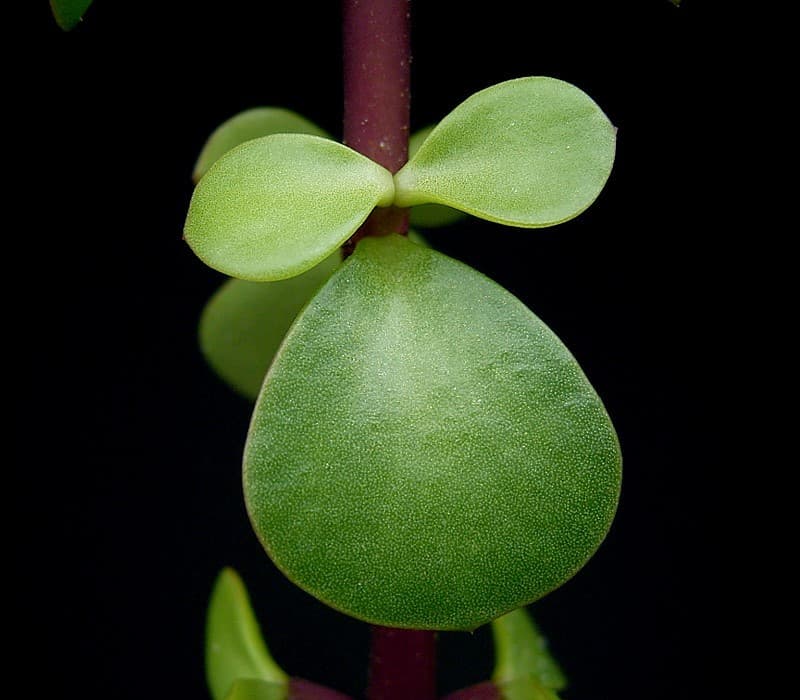
Look for small, rounded leaves in opposite pairs on reddish young stems. Older stems become woody; color alone is not enough to identify the plant.
Photo: Frank Vincentz / Wikimedia Commons. CC BY-SA 3.0. Resized for display.

The "mini jade" nickname causes constant confusion, so let's clear it up: Portulacaria afra is not a jade plant. The true jade plant is Crassula ovata, and the two aren't even in the same plant family. Portulacaria belongs to the Didiereaceae family, while Crassula is in Crassulaceae.
| Feature | Portulacaria afra | Crassula ovata |
|---|---|---|
| Leaf Size | Small (1-2 cm), round | Large (3-5 cm), oval |
| Stems | Thin, reddish-brown | Thick, woody, grey-brown |
| Growth Rate | Fast | Slow |
| Family | Didiereaceae | Crassulaceae |
| Pet Safety | Non-toxic | Mildly toxic |
Both plants share similar care requirements — lots of light and infrequent watering — but Portulacaria grows significantly faster and handles full sun and heat even better than Crassula. It's also the safer choice for pet owners.
Light Requirements
Portulacaria afra is a full-sun lover. In its native South Africa, it grows in open scrubland with direct, intense sunlight. Indoors, give it the brightest spot you have — a south-facing window is ideal. It will tolerate bright indirect light, but growth becomes leggy and stems weaken without enough direct sun.
If you move your plant outdoors for summer, acclimate it gradually over a week to prevent sunburn on leaves that adjusted to indoor light levels. Once hardened off, it can handle full outdoor sun in most climates. For guidance on optimizing light indoors, see our indoor lighting guide.
Watering: The #1 Issue
Getting watering right is the single most important factor in keeping Portulacaria afra alive. As a succulent, it stores water in its plump leaves and stems, making it exceptionally drought-tolerant. Let the soil dry out completely before watering — stick your finger in to check, and if there's any moisture in the top two inches, wait.
Check the pot rather than following a fixed weekly schedule. Light, temperature, pot size, and the mix all change how fast it dries. Water thoroughly when the mix is dry, let it drain, and empty the saucer. In a cool, dim winter room, the interval can be much longer. Use our succulent watering guide to adjust your routine.
Underwatered elephant bush shows wrinkled, shriveled leaves that feel papery and may drop. This is easily fixed with a thorough bottom-watering — place the pot in water for 20-30 minutes and leaves should plump up within a day or two. Underwatering is a far less serious problem than overwatering.
Why Is My Elephant Bush Dropping Leaves?
Check soil moisture and stem firmness before adding water. Leaf drop can follow a watering problem or a move to lower light. These clues help you decide what to check next; one fallen leaf is not a diagnosis.
| Symptom | Overwatering | Underwatering |
|---|---|---|
| Leaves | Yellowing, mushy, translucent | Wrinkled, shriveled, papery |
| Stems | Soft, blackened, mushy at base | Thin but firm, possibly woody |
| Soil | Wet, soggy, possibly smells sour | Bone dry, pulling from pot edges |
| Roots | Brown, mushy, foul-smelling | Dry but white and firm |
Root rot rescue:If you catch overwatering early, there's hope. Unpot the plant, shake off all wet soil, and trim away every mushy, brown root with sterilized scissors. Cut back any blackened stem tissue to firm, healthy growth. Let the plant air-dry for 24-48 hours in a shaded spot, then repot in completely dry, fast-draining succulent mix. Don't water for at least a week after repotting.
If rot has progressed too far, take healthy stem cuttings from above the rot line to propagate new plants — Portulacaria roots extremely easily from cuttings.
Soil and Repotting
A fast-draining mix is critical. Use a cactus/succulent soil amended with extra perlite or pumice — aim for about 50% mineral content. The soil should feel gritty and drain almost instantly when watered. Heavy, water-retentive soil is a recipe for root rot.
Repot every 2-3 years or when roots fill the pot. Portulacaria grows fast, so you may need to size up more often than with a jade plant. Always use a pot with drainage holes — unglazed terracotta is ideal because it wicks away excess moisture. For more on soil and containers, see our pots and plant anatomy guide.
Propagation
Portulacaria afra is one of the easiest succulents to propagate. Take stem cuttings of 3-4 inches, remove the lower leaves, and let the cut end callous over for 1-2 days. Then insert into dry succulent mix and wait about a week before lightly watering. Roots typically form within 2-3 weeks.
You can also root cuttings in water, though soil propagation tends to produce stronger root systems. Individual leaf propagation is possible but unreliable and very slow compared to stem cuttings.
Common Mistakes to Avoid
- ✗Overwatering. The #1 killer. Let soil dry completely between waterings — these are succulents, not tropicals.
- ✗Insufficient light. Portulacaria needs bright direct light. A dim corner will produce weak, leggy growth that topples over.
- ✗Heavy soil. Standard potting mix holds too much moisture. Always use gritty, fast-draining succulent soil with added perlite.
- ✗Confusing it with Crassula ovata. They're different plants with slightly different needs. Portulacaria is faster-growing and more sun-hungry.
- ✗Pots without drainage. Decorative pots without holes trap water and guarantee root rot. Always use drainage holes.
Related Resources
Elephant Bush Reference
University of Wisconsin–Madison Extension: Elephant BushFrequently Asked Questions
The most common cause of a dying elephant bush is overwatering, which leads to root rot — look for mushy, blackened stems and dropping leaves that feel soft. The second most common cause is underwatering, identified by wrinkled, shriveling leaves that feel papery. Check the roots: healthy roots are white and firm, while rotted roots are brown and mushy. If rot is present, trim away all affected roots and stems, let the plant dry for 24-48 hours, then repot in completely dry, well-draining soil.
Crassula ovata (jade plant) and Portulacaria afra (elephant bush) are often confused but belong to different plant families. Portulacaria has smaller, rounder leaves (about 1-2 cm), thinner reddish-brown stems, and grows much faster. Crassula ovata has larger, thicker leaves (3-5 cm), woody brown trunks, and grows slowly. Portulacaria is in the Didiereaceae family while Crassula belongs to Crassulaceae.
An underwatered Portulacaria afra shows wrinkled, shriveled leaves that may drop easily. The fix is simple: give the plant a thorough bottom-watering by placing the pot in a saucer of water for 20-30 minutes, allowing the dry soil to absorb moisture from below. The leaves should plump back up within a day or two. Resume a regular watering schedule, watering when the soil is completely dry.
Check the mix before watering instead of using a fixed interval. Let it dry, then water thoroughly and drain the pot. A bright, warm plant may dry faster than one in a cool winter room. Pot size, drainage, and light all affect the interval.
Yes, Portulacaria afra is considered non-toxic to cats and dogs. Unlike many succulents such as Euphorbia or Kalanchoe, elephant bush is safe for pet-friendly households. It is even edible for humans in its native South Africa, where it is sometimes added to salads.
Let Sproutly simplify plant care.
Identify plants, understand likely issues, and get care schedules that fit your home.