Purple Passion Plant Care: Color, Pruning & Cuttings
Updated · Sproutly
Purple passion plant (Gynura aurantiaca) has green leaves covered in purple hairs. Give it bright, gentle light, water as the surface starts to dry and pinch growing tips to encourage branching. Renew leggy stems with cuttings when needed; flowering does not mean the plant has reached an inevitable death date.
Recognize the plant before changing its care
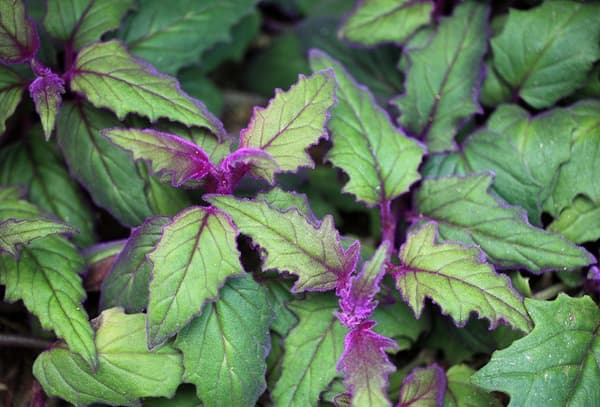
The purple comes from hairs on green foliage. The color can look stronger along the edges and young growth, depending on lighting and viewing angle.
Photo: Tanaka Juuyoh / NC State Extension. CC BY 4.0. Resized for display.
Look for soft, toothed leaves and hairy stems that sprawl as they lengthen. Smooth purple leaves on a jointed trailing stem may belong to a Tradescantia instead. Avoid choosing a care routine from color alone.
A new plant may arrive tightly pinched in a nursery pot. That compact appearance needs maintenance as the stems grow. A longer stem is not automatically a failing plant, but widely spaced leaves and weak new growth are reasons to reassess light.
Set up light, moisture and drainage
| Need | Useful starting point | How to adjust |
|---|---|---|
| Light | A bright window with protection from strong afternoon sun | If new stems stretch and foliage becomes less purple, improve light gradually. |
| Water | Let the surface begin to dry, then water the root ball and drain | Check moisture below the surface before watering a wilted plant. |
| Container | A pot with drainage holes that fits the roots | Do not leave water inside a decorative outer pot. |
| Air and temperature | A stable, comfortably warm indoor position | Keep away from cold glass and blasts of heated or cooled air. |
| Feeding | A houseplant fertilizer used as labelled during active growth | Pause during poor growth or root trouble; extra feed will not fix weak light. |
The practical aim is moist roots with access to air. That differs from keeping a pot saturated. In a small hanging pot, check more often during warm weather; in a cool, dim room, the same plant can take much longer to dry.
Direct water onto the potting mix so you can see how much enters the pot. A splash on a leaf is not a death sentence, but repeated wetting of hairy foliage is unnecessary. If water sits on leaves for long periods, improve airflow and watering technique. Do not treat daily misting as a substitute for checking the root ball.
When the purple color fades
First compare new growth with new growth under similar light. Old and young leaves, photographs taken at different angles, and heavily shaded parts of the same plant may look quite different.
- Look at stem spacing. Long gaps between leaves plus weaker color suggest the position may be too dim.
- Check the actual window. A bright room to your eyes can have a dark shelf. Move closer in stages, observing for bleached or dry patches.
- Check the leaf surface. Dust, pest damage and worn hairs can change its appearance. Do not scrub or polish the foliage to make it purple.
- Judge the next growth. Changes in care are easier to evaluate on developing leaves than on a damaged old leaf.
NC State Extension links inadequate light with greener foliage and recommends bright indirect light with afternoon protection. Increasing light does not mean putting an indoor-grown plant straight into hot sun.
Pinch for branching; take cuttings for a fresh start
Decide whether you want a compact plant or trailing growth. To encourage branching, use clean scissors to trim a healthy stem just above a leaf pair. Leave foliage on the parent plant rather than stripping it to bare stems all at once.
- Choose a healthy, non-flowering stem tip with several leaves and visible nodes. Do not use a soft, blackening base.
- Cut below a node and remove the lowest leaves. Keep the upper leaves above the rooting medium.
- Insert the bare lower node into a small pot of lightly moist propagation mix. Water rooting is another option; keep leaves out of the water and replace it if it becomes cloudy.
- Keep the cutting in bright indirect light. A loose clear cover can slow drying, but ventilate it and avoid trapping wet leaves against plastic.
- Move on when roots are developed enough to support the cutting. New leaves alone do not prove a strong root system. Handle gently and keep moisture consistent while it establishes.
Take a few cuttings before an older plant becomes severely bare or unhealthy. This is a practical way to refresh its shape, not evidence of a fixed two- or three-year biological lifespan. Label the start date and watch firmness and roots instead of promising success on a particular day.
What to do about orange flowers
The orange-yellow flowers can smell unpleasant indoors. Removing buds with clean scissors is an aesthetic choice that keeps attention on the foliage. If you keep them, continue checking the plant’s normal light, moisture and pest needs.
Both NC State and UF/IFAS production guidance describe this as a foliage plant whose flowers are often unwanted. Neither establishes that flowering inevitably kills a home-grown plant. Decline after flowering still deserves the same checks for roots, light and pests.
Troubleshoot without guessing from one symptom
| What you see | Check | Respond |
|---|---|---|
| Limp leaves and a light, dry pot | Whether the root ball is dry throughout | Water evenly, let it drain, and reassess firmness. |
| Limp leaves and a heavy, wet pot | Standing water, soft stems or damaged roots | Stop adding water and investigate drainage or rot. |
| Bare, stretching stems | Light and the time since the last pinch | Improve light gradually and root healthy tips to renew the plant. |
| Sticky growth, white clusters or fine speckling | Leaf undersides and shoot tips for pests | Separate it from other plants and identify the pest before treatment. |
After making a correction, photograph the same shoot periodically in similar light. That gives you a clearer record of whether new growth is improving than changing the light, mix, fertilizer and watering on the same day.
Frequently Asked Questions
The leaves are green underneath purple hairs. Inadequate light can make the plant appear greener, but age, viewing angle and surface damage also affect color. Compare new leaves and stem spacing before moving it gradually toward better light.
Flowering does not establish an inevitable death cycle. This is a perennial plant, although older plants can become leggy. Flowers are often removed because of their smell; declining roots or poor growing conditions still need separate investigation.
Healthy stem cuttings with a node can root in water. Keep leaves above the water, replace cloudy water and transfer gently once roots can support the cutting. Lightly moist propagation mix is also suitable.
Check the pot, not a fixed calendar. Water when the surface starts to dry and the root ball is no longer wet, then drain. Light, temperature, pot size and existing roots all change the interval.
Sources & further reading
- NC State Extension: Gynura aurantiaca
- UF/IFAS: Gynura production and flower management
- University of Missouri Extension: home propagation methods
This guide combines the references above with practical decision steps for home growers. Conditions and cultivars vary. How we approach plant guidance · Suggest a correction