How to Get Rid of Fungus Gnats
Last Updated: September 2026 · Houseplant Gnat Control
Direct Answer
Tackle fungus gnats in two places: yellow sticky traps catch flying adults, while watering adjustments and a labeled BTI treatment target the damp mix where larvae develop. Let the surface dry as much as your plant tolerates. Expect to monitor for several weeks: the indoor life cycle is about 3-4 weeks, and adults can keep emerging during treatment.
First: Are These Actually Fungus Gnats?
Fungus gnats are commonly confused with fruit flies. Here's how to tell the difference.
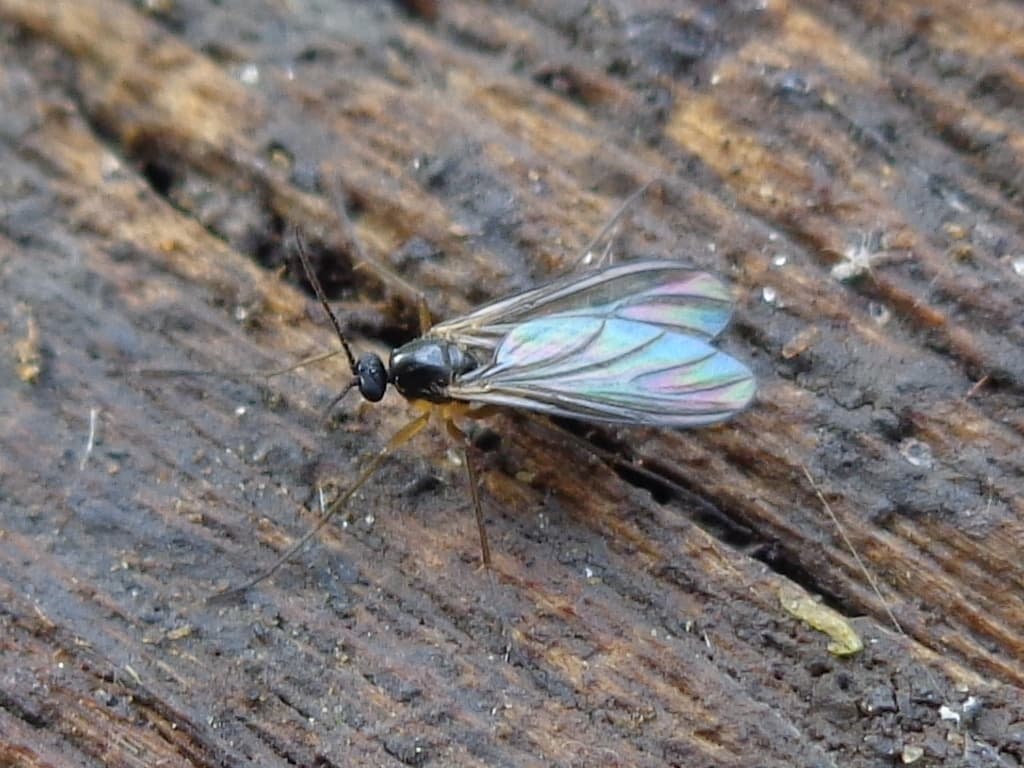
A magnified Bradysia fungus gnat. Look for a slender, mosquito-like body and long antennae. The pale larvae with dark heads live in the potting mix.
Photo: AfroBrazilian / Wikimedia Commons. CC BY-SA 3.0. Resized for display.

| Feature | Fungus Gnats | Fruit Flies |
|---|---|---|
| Size | Very small (2-3mm) | Slightly larger (3-4mm) |
| Color | Dark gray/black | Tan/brown, red eyes |
| Where you see them | Near plant soil, crawling on pots | Near fruit, kitchen, trash |
| Flight pattern | Weak, erratic, close to soil | Stronger, hover around food |
| Body shape | Mosquito-like, long legs | Round, stocky |
How to Get Rid of Gnats Fast
Adult numbers may fall quickly, while insects already developing in the mix continue to emerge. Keep monitoring and follow the treatment label for repeat applications.
| Timeframe | Goal | Action |
|---|---|---|
| Today | Stop new eggs | Pause watering if the topsoil is wet; remove dead leaves from soil. |
| 24-48 hours | Reduce flying adults | Place yellow sticky traps at soil level and near windows. |
| Week 1 | Target larvae | Apply BTI or nematodes as a soil drench according to label directions. |
| Weeks 2-4 | Break the cycle | Repeat monitoring and keep the top layer drying between waterings. |
Why They Keep Coming Back: The Lifecycle
Understanding the 4-stage lifecycle is key to breaking the cycle. You must target all stages simultaneously.
Eggs
4-6 days
Up to 200 eggs laid in moist topsoil. Invisible to the naked eye.
Larvae
12-14 days
Translucent worms (5mm) that feed on soil fungi and fine roots.
Pupae
3-4 days
Cocoon stage in the soil. Resistant to most treatments.
Adult
7-10 days
Flies around, mates, lays eggs. The cycle repeats every 3-4 weeks.
Total lifecycle: ~3-4 weeks. That's why consistent treatment for a full month is essential.
Five Steps to Control Fungus Gnats
1. Dry Out the Soil
Foundation · Do This FirstFungus gnat larvae thrive in damp, organic potting mix. Let the surface dry between waterings as much as your plant tolerates, and avoid keeping the whole pot constantly saturated. Moisture-loving plants need a gentler adjustment alongside traps and a treatment that targets larvae.
How to do it:
- • Let the surface dry as far as your plant tolerates; check before watering again.
- • Empty the saucer or outer pot after watering so roots do not sit in water.
- • For moisture-loving plants, dry the surface layer rather than the entire root ball.
2. Yellow Sticky Traps
Immediate · Catches AdultsFungus gnats are strongly attracted to the color yellow. Sticky traps placed near the soil surface catch adults before they can lay more eggs. This provides immediate visible reduction and also serves as a monitoring tool — fewer gnats on the trap means your treatment is working.
How to do it:
- • Place traps horizontally just above soil level for maximum catch rate.
- • Use 1 trap per plant, or 1 per 2-3 closely grouped plants.
- • Replace when covered or after 2 weeks.
- • Keep adhesive traps out of reach of children and pets.
3. BTI Soil Drench
Targeted · Best Repeat TreatmentBTI, short for Bacillus thuringiensis israelensis, is a biological control used against fly larvae such as mosquitoes and fungus gnats. It targets larvae in the potting mix, so it pairs well with sticky traps that catch adults.
How to use:
- • Choose a product whose label permits treating fungus gnat larvae in potting media; follow its application and repeat-treatment directions.
- • Apply as a soil drench so the active ingredient reaches larvae in the top potting mix.
- • Repeat as directed; BTI does not persist indefinitely in indoor potting media.
- • Keep sticky traps up while BTI works underground.
4. Remove Breeding Sites
Prevention · Check Every PotRemove damp organic debris and check neighboring pots. A decorative gravel layer does not fix wet mix underneath. Focus on moisture, drainage, and the places larvae can keep developing.
How to do it:
- • Pick fallen leaves and dead flowers off the potting mix.
- • Empty saucers and inspect the bottom of decorative outer pots.
- • Check nearby plants even if you first noticed flies at only one pot.
- • If a plant wilts in wet soil, follow the overwatered plant rescue guide.
5. Beneficial Nematodes or Repotting
Backup · Severe InfestationsFor severe infestations that keep returning, step beyond traps and moisture changes. Beneficial nematodes such as Steinernema feltiae can target larvae in damp media, while repotting may be necessary if the mix has broken down and stays wet for too long.
When to escalate:
- • Adults still appear after 3-4 weeks of dry topsoil and traps.
- • The potting mix smells sour, collapses, or stays wet for many days.
- • Seedlings, cuttings, or young plants are wilting despite careful watering.
- • Multiple pots are infested; treat the group, not just one plant.
A Weekly Follow-Up Plan
Combine methods for fastest results. Here's the optimal sequence.
Week 1: Identify and Treat
Set traps, check every pot, and adjust watering to the plant. If using BTI or nematodes, follow the label, including moisture requirements. Note the date and trap catch so you can compare later.
Week 2: Continue Treatment
Replace full traps. Repeat BTI or nematodes according to directions. Continue dry topsoil habits. You should see fewer adults on traps.
Week 3: Mop Up
Last remaining pupae may emerge as adults, so keep traps in place. If numbers are not dropping, inspect the potting mix and drainage.
Week 4: Monitor & Prevent
Keep checking traps and pots. A clear trap is encouraging, but one quiet week does not prove every immature gnat is gone. If catches stay high, revisit identification and look for another damp pot or breeding site.
Preventing Future Infestations
Once you're clear, these habits keep gnats from returning.
Fungus Gnat References
Related Answers
Frequently Asked Questions
Adult fungus gnats are mostly just annoying — they don't damage plants directly. However, their larvae feed on organic matter and fine root hairs in the soil, which can stress seedlings, propagations, and young plants. Mature, healthy plants can tolerate moderate populations, but large infestations weaken root systems and slow growth.
Fungus gnats typically arrive in contaminated potting soil — especially cheap, organic-rich mixes. They can also fly in through open windows. Each female lays up to 200 eggs in moist topsoil, and the lifecycle (egg to adult) takes only 3-4 weeks in warm conditions. Overwatered plants create ideal breeding conditions.
Plan to monitor for several weeks. One indoor lifecycle takes about 3-4 weeks, but that is not a guaranteed elimination deadline. Catch adults with sticky traps, adjust watering within your plant's tolerance, and use a BTI product labeled for fungus gnat larvae if needed. Check nearby pots if new adults keep appearing.
Fungus gnats can spread between houseplants but they can't infest your house the way fruit flies can. They need moist organic soil to breed — they won't reproduce in carpets, food, or drains. However, they can appear in multiple plant pots if the infestation goes untreated, since adults fly between plants to lay eggs.
No. Letting the surface dry as much as the plant tolerates reduces suitable larval habitat, but it does not catch flying adults. Avoid drying out moisture-loving roots. Pair watering adjustments with yellow sticky traps and, if needed, a BTI product or beneficial nematodes labeled for fungus gnat larvae.
A diluted 3% hydrogen peroxide drench is a common home remedy, but it is not the most precise long-term control and can stress sensitive roots or soil biology if repeated. If you use it, dilute carefully, avoid stronger concentrations, and test on one plant first. BTI and moisture control are safer repeat strategies.
No. Adult fungus gnats are nuisance flies around plants and windows, but they do not bite people. The plant risk comes from larvae feeding in damp potting mix, especially around seedlings, cuttings, and weak root systems.
Let Sproutly simplify plant care.
Identify plants, understand likely issues, and get care schedules that fit your home.