Why Is My Monstera Turning Yellow?
Last Updated: April 2026 · 7 Causes Covered
Direct Answer
The most common cause of yellow Monstera leaves is overwatering, which suffocates roots and blocks nutrient uptake. Other causes include insufficient light, nutrient deficiency, temperature stress, natural aging, repotting shock, and pest damage. Start by checking your soil— push your finger 2 inches deep. If it's still damp days after watering, overwatering is your likely culprit.
Is This Normal or Urgent?
Not all yellowing means your plant is dying. Here's how to tell at a glance.
Probably Normal
- Only the oldest, lowest leaf is yellowing
- It's happening slowly (over 2+ weeks)
- Only 1 leaf at a time, rest are healthy
- Plant recently pushed out new growth
- You repotted within the last 2 weeks
Needs Attention
- Multiple leaves yellowing at once
- New or mid-level leaves are affected
- Yellowing has brown or mushy spots too
- The soil smells musty or sour
- Leaves are drooping AND yellowing
Diagnose Your Monstera: Match the Pattern
The pattern of yellowing tells you the cause. Find the one that matches your plant below.
| What You See | Most Likely Cause | Urgency |
|---|---|---|
| Bottom leaves turn uniformly yellow, soil is wet | Overwatering / root rot | High |
| Whole leaf turns pale, washed-out yellow | Insufficient light | Medium |
| Yellow between veins, but veins stay green | Nutrient deficiency (iron/nitrogen) | Medium |
| Sudden yellowing after a cold snap or AC draft | Temperature / cold stress | Medium |
| Only the oldest, lowest leaf — rest is fine | Natural aging | None |
| Yellowing 1-2 weeks after repotting | Transplant shock | Low |
| Yellowing with tiny webs, spots, or sticky residue | Pest infestation | High |
Visual Guide: What Each Pattern Looks Like
Compare your plant's yellowing pattern to these reference images.
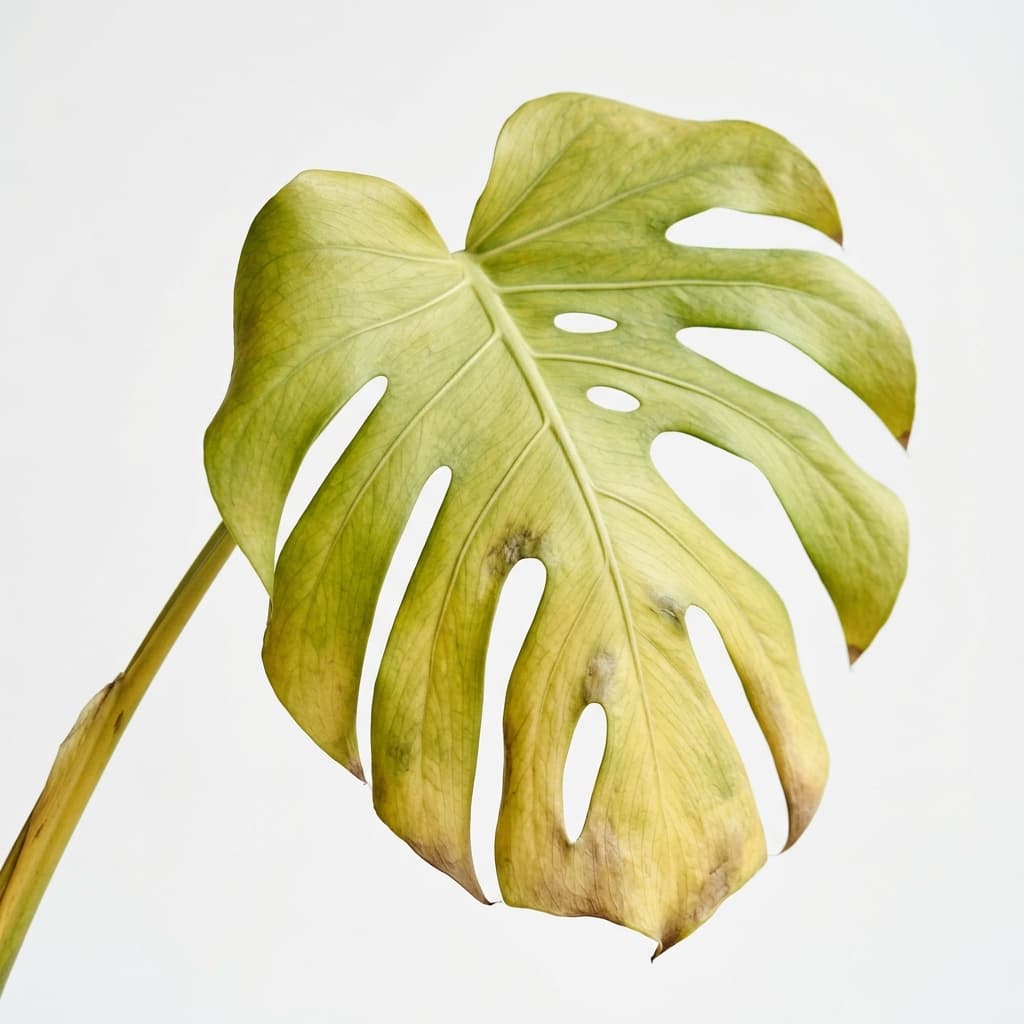
Overwatering
Uniform yellow, limp texture
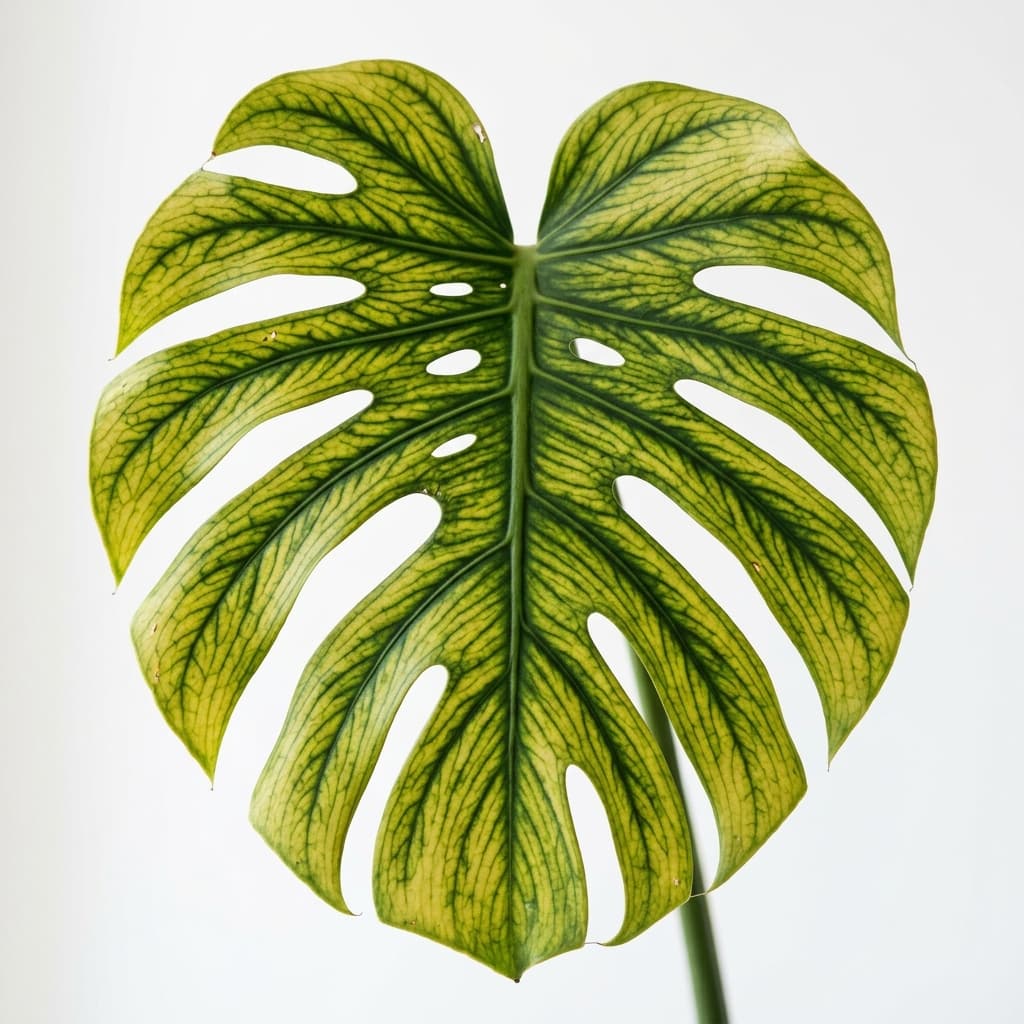
Nutrient Deficiency
Yellow between veins
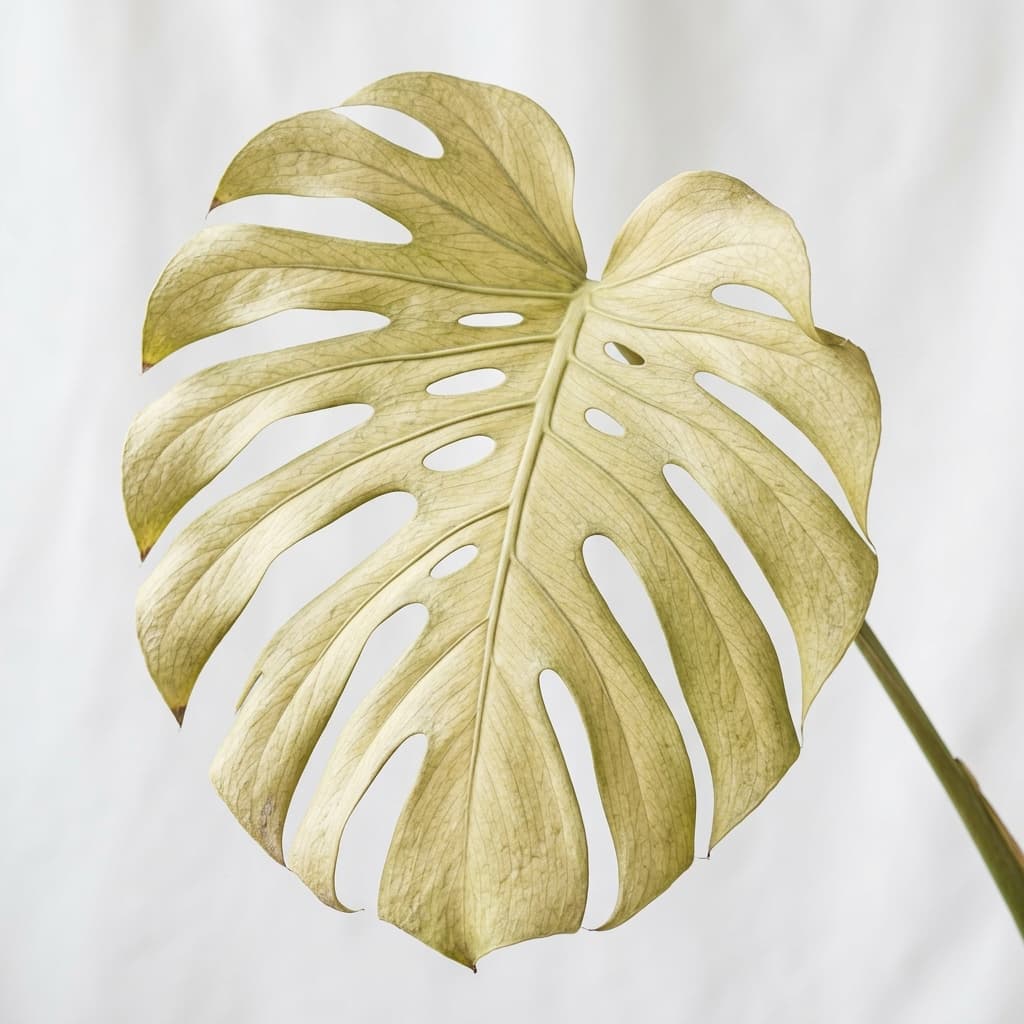
Light Stress
Pale, bleached appearance
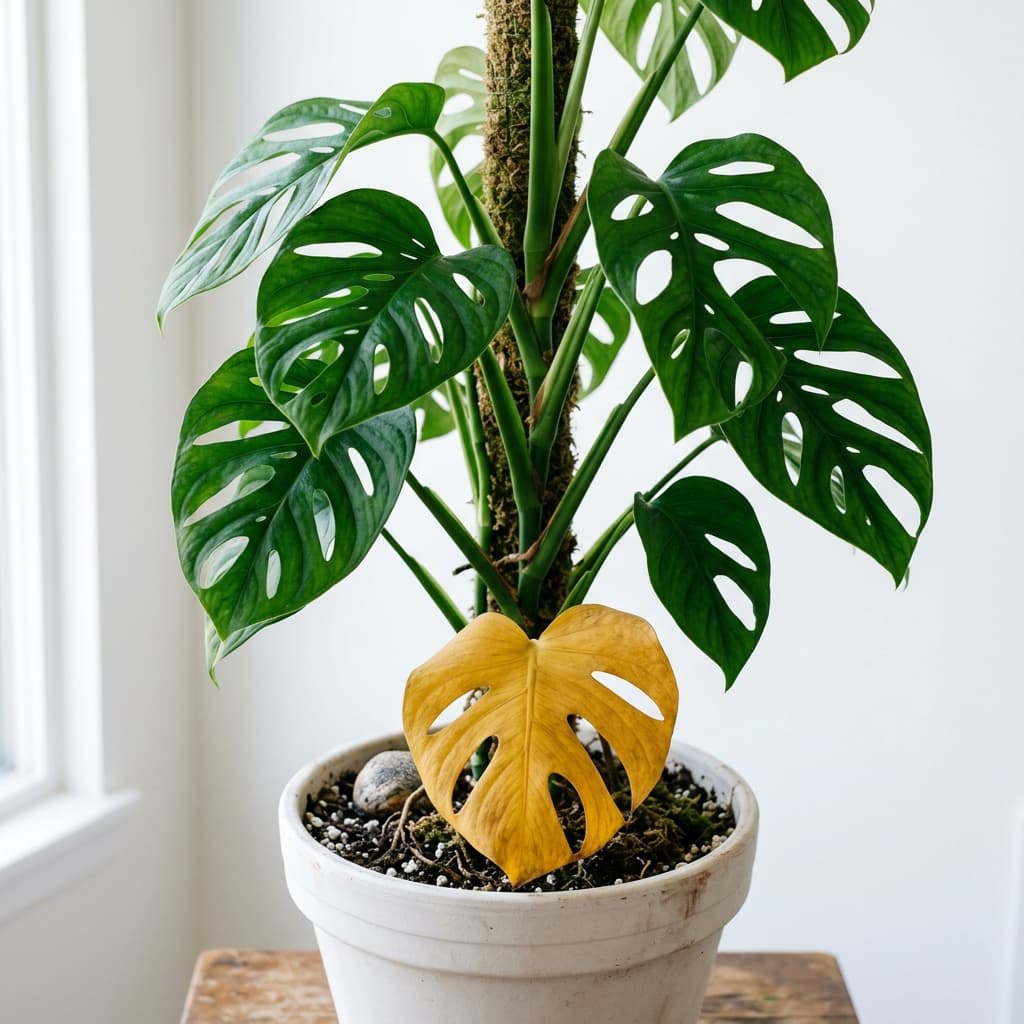
Natural Aging
Only lowest leaf affected
The 7 Causes (+ Step-by-Step Recovery)
1. Overwatering & Root Rot
Most Common · High UrgencyMonsteras need their top 2 inches of soil to dry between waterings. When soil stays constantly wet, oxygen can't reach the roots. Roots suffocate, begin to rot, and can no longer transport water or nutrients — causing leaves to yellow from the bottom up. The yellowing is uniform across the leaf, and the leaf often feels soft or limp rather than crispy.
Recovery Steps:
- Stop watering immediately and let the soil dry out completely.
- Remove the plant from the pot and inspect the roots. Healthy roots are white/tan and firm. Rotted roots are brown, mushy, and smell bad.
- Cut away all rotted roots with sterilized scissors. Be aggressive — one rotten root can spread.
- Repot into fresh, well-draining aroid mix (40% coir, 25% orchid bark, 25% perlite, 10% charcoal). Use a pot with drainage holes.
- Wait 5-7 days before watering the freshly repotted plant to let cut roots callus over.
- Adjust your watering schedule: always use the finger test (dry at 2 inches = water).
→ See our full overwatered plant rescue guide for detailed root rot treatment.
2. Insufficient Light
Common · Medium UrgencyMonsteras evolved under tropical canopies and need bright indirect light. In dim conditions, the plant can't produce enough energy via photosynthesis and starts sacrificing older leaves. Leaves turn a pale, washed-out yellow — not the vibrant golden yellow of aging. Growth also slows dramatically, and new leaves emerge smaller without fenestrations.
Recovery Steps:
- Move to brighter light gradually — shift the plant 1-2 feet closer to a window every 3-4 days to avoid shock.
- Target location: within 3-5 feet of a bright east or north-facing window, or 5-8 feet from south/west-facing with a sheer curtain.
- Consider a grow light if you lack natural light. 12-14 hours of supplemental light mimics tropical conditions.
- Rotate the plant quarterly so all sides receive even light exposure.
→ See our indoor lighting guide for full details on measuring and optimizing light.
3. Nutrient Deficiency
Moderate · Medium UrgencyThe tell-tale sign is interveinal chlorosis: the tissue between the veins turns yellow while the veins themselves stay dark green, creating a striped or web-like pattern. This typically indicates an iron or nitrogen deficiency. It usually appears on newer leaves first (iron) or older leaves first (nitrogen). Plants that haven't been fertilized in 6+ months or have been in the same soil for 2+ years are most at risk.
Recovery Steps:
- Feed with a balanced liquid fertilizer (10-10-10 or 20-20-20) diluted to half strength.
- Fertilize monthly during spring and summer (active growth). Stop in winter.
- Check soil pH — iron becomes unavailable in alkaline soil (above pH 7). Aroid mixes are naturally slightly acidic, which is ideal.
- Consider repotting if the plant has been in the same soil for 2+ years — nutrients may be depleted.
4. Temperature & Draft Stress
Seasonal · Medium UrgencyMonsteras thrive in 65-85°F (18-30°C). Cold drafts from windows, AC vents, or exterior doors can cause rapid, sudden yellowing — often appearing within 24-48 hours of exposure. Heat stress from radiators or direct afternoon sun can also cause bleached yellow patches. The yellowing is often uneven, affecting the side of the plant closest to the stress source.
Recovery Steps:
- Move the plant away from the draft or heat source immediately.
- Aim for stable temperatures — avoid spots where temperature swings more than 10°F between day and night.
- Never place near single-pane windows in winter or directly under AC vents.
- Already damaged leaves won't recover — trim them off once fully yellow and focus on providing stable conditions going forward.
5. Natural Aging
Normal · No Action NeededThis is the most commonly misdiagnosedcause of yellowing — and the only one that isn't a problem. As a Monstera grows and pushes new leaves from the top, it naturally reabsorbs energy from its oldest lower leaves, which turn uniformly golden-yellow and eventually brown. This is healthy, normal plant behavior — similar to how trees drop old leaves.
How to Confirm It's Natural Aging:
- Only 1 leaf at a time, always the lowest/oldest
- The rest of the plant looks vibrant and healthy
- New growth is actively unfurling from the top
- The yellow is a warm, even golden color (not pale or patchy)
Simply trim the leaf once it's fully yellow. No changes to your care routine are needed.
6. Repotting / Transplant Shock
Temporary · Low UrgencyIf yellowing started within 1-2 weeks of repotting, it's likely transplant shock. The plant is redirecting energy from existing leaves to establish roots in its new container. Expect 1-3 lower leaves to yellow during this adjustment period. However, if more than 3 leaves yellow, the new pot may be too large (retaining excess moisture) or the soil mix is too dense.
Recovery Steps:
- Be patient. Don't move, repot, or fertilize the plant again — give it stability.
- Maintain consistent watering — not too wet, not too dry.
- Keep it in the same light conditions it had before the repot.
- Wait 4-6 weeks before fertilizing — fresh soil has enough nutrients.
7. Pest Infestation
Less Common · High UrgencySpider mites, thrips, mealybugs, and scale insects feed on leaf sap, draining chlorophyll and causing localized yellowing. Look for tiny webs (spider mites), white cottony clusters (mealybugs), brown bumps (scale), or silver streaks/black dots (thrips). Yellowing from pests is usually patchy and may come with stippling, a sticky residue (honeydew), or visible insects on the undersides of leaves.
Recovery Steps:
- Isolate the plant immediately to prevent the infestation from spreading.
- Shower the plant with room-temperature water to physically remove pests.
- Apply neem oil spray (1 tsp neem oil + 1 tsp dish soap + 1 quart water) weekly for 3-4 weeks.
- For stubborn infestations, use insecticidal soap or systemic treatment.
- Inspect weekly for 2 months after treatment — pest eggs can survive and hatch later.
→ See our pest control guide for more treatment options.
5 Common Mistakes After Yellowing Starts
Panicking leads to overcorrection — which usually makes things worse. Avoid these.
Watering more to "fix" yellow leaves
If overwatering caused the yellowing, adding more water accelerates root rot. Always check soil moisture first.
Cutting partially yellow leaves too early
A leaf that is only 30-50% yellow is still photosynthesizing and feeding the plant. Wait until it's fully yellow before removing.
Fertilizing a stressed plant
Fertilizer doesn't heal — it feeds. Giving fertilizer to a plant with root rot is like force-feeding a sick patient. Fix the cause first, then resume feeding.
Repotting and pruning at the same time
Each of these is stressful on its own. Doing both simultaneously can send a weakened plant into severe shock. Space them 3-4 weeks apart.
Moving to direct sunlight to "boost energy"
A plant that was in low light will burn in direct sun. Always acclimate gradually, shifting 1-2 feet closer every few days.
Related Answers
Frequently Asked Questions
It's normal for the oldest, lowest leaves to yellow and drop as the plant grows — this is natural aging. A mature Monstera might shed 1-2 lower leaves per season. However, if multiple leaves or newer leaves are yellowing, it indicates a care issue that needs attention. Check our "Normal vs. Urgent" section above for a quick triage.
Yes. Once a Monstera leaf has turned fully yellow, the chlorophyll is destroyed and it won't recover or turn green again. Cut it off at the base of the petiole with clean, sterilized scissors or shears to redirect the plant's energy toward healthy growth. Wait until the leaf is completely yellow — a partially yellow leaf is still photosynthesizing.
Signs include: consistently moist soil more than 5 days after watering, yellow leaves starting from the bottom and spreading upward, mushy or dark brown spots near the petiole, a musty or sour smell from the soil, and waterlogged soil that stays compacted. Use the finger test — push your finger 2 inches into the soil. If it's still damp, don't water.
No. Once a leaf has turned fully yellow, the chlorophyll is gone and it cannot be restored. However, you can prevent other leaves from yellowing by identifying and fixing the underlying cause. If a leaf is only partially yellow (small yellow spots or edges), it may stabilize once the cause is addressed, but the yellow parts won't revert.
Recovery from mild overwatering takes 2-4 weeks. If root rot has set in and you've repotted, expect 4-8 weeks before you see new healthy growth. During recovery, water sparingly, provide bright indirect light, and avoid fertilizing. New leaves that unfurl healthy and green are your sign that the plant has recovered.
Transplant shock is normal and can cause 1-3 leaves to yellow within 1-2 weeks of repotting. The plant is redirecting energy to root establishment. Minimize stress by keeping it in the same light conditions, not fertilizing for 4-6 weeks, and maintaining consistent moisture without overwatering. If more than 3 leaves yellow, the new pot may be too large or the soil mix is retaining too much water.
Let Sproutly simplify plant care.
Identify plants, understand likely issues, and get care schedules that fit your home.