Spider Plant Care: Brown Tips, Water and Plantlets
Updated · Sproutly
Keep a spider plant out of direct sun, and do not assume brown tips mean the plant is dying. NC State points to chlorine and fluoride in tap water as a cause of leaf-tip burn. Check the water and the wet-dry cycle before you change everything else.
Light, water and the hanging pot
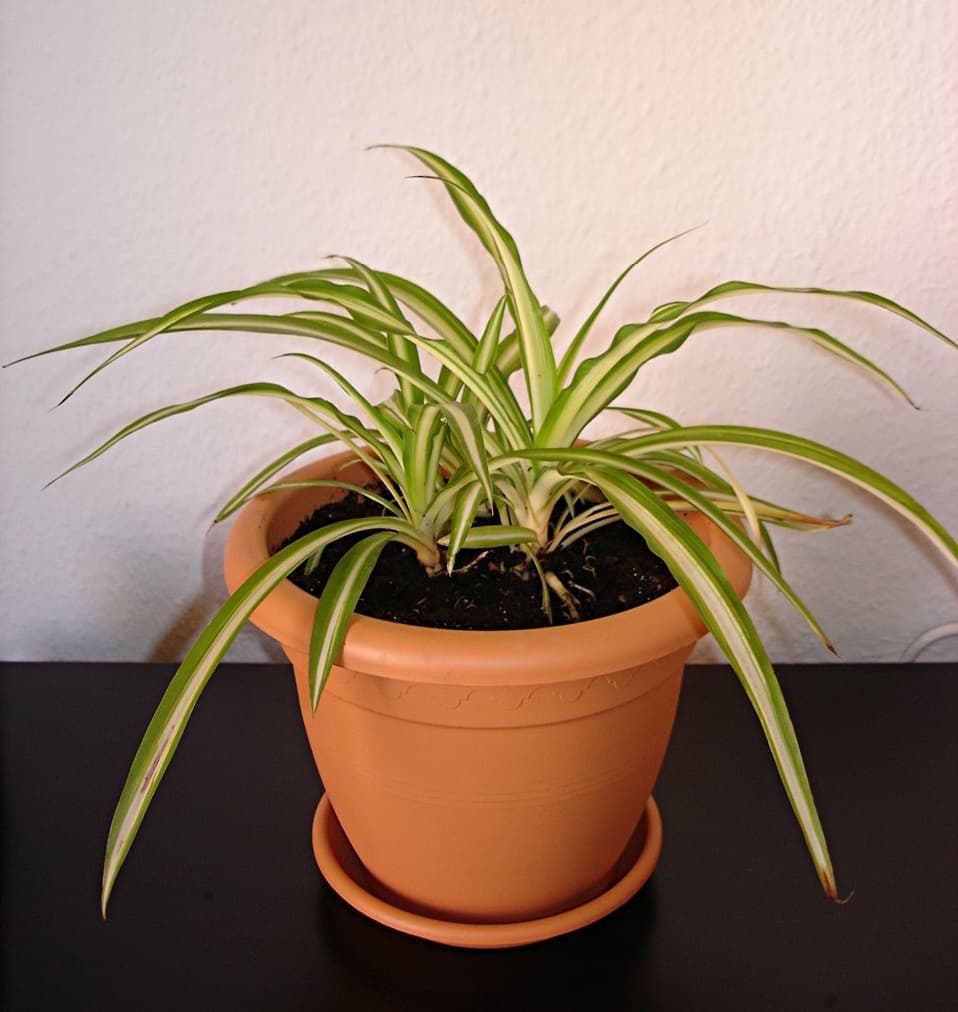
A spider plant’s leaves are flexible and arching. A snake plant can also be striped, but its leaves are usually much firmer.
Photo: Nguyễn Dương Khang; crop by Sciencia58 / Wikimedia Commons. CC BY-SA 2.5. Resized for display.

| Factor | Starting point | What to check next |
|---|---|---|
| Light | Medium light, out of direct sun | NC State says it prefers medium light, tolerates deep shade, and is intolerant of direct sun. A young plant may have no babies yet. |
| Water | A moist, draining mix; drought is tolerated | Let excess water leave the pot. Reduce watering in winter, when growth slows. |
| Water quality | Rainwater, distilled, or filtered water rather than tap water | NC State advises avoiding tap water, because chlorine and fluorides can cause tip burn. |
| Humidity | Average to medium indoor humidity | A tray of pebbles and water, or a humidifier, is NC State’s suggestion when the air is dry. Do not leave the pot standing in the water. |
| Temperature | Keep it above about 45°F / 7°C | A window that freezes at night is too cold even if the room is warm by day. |
Chlorophytum comosum is the spider plant, spider ivy, or ribbon plant. Leaves grow in a basal clump. Long stolons can carry small white flowers and plantlets. Stripes differ by cultivar: ‘Vittatum’ has a pale center, ‘Variegatum’ has pale margins. A stripe alone does not separate it from a snake plant.
Brown tips have a short checklist
- Change the water you use. If you have been watering with tap water, try rainwater, distilled water, or water filtered for fluoride, and flush the pot so salts can leave through the drainage holes.
- Check the wet-dry swing. The plant likes moist, well-drained mix and can tolerate a dry spell, but a cycle of bone-dry soil and then a long soak marks the tips. Feel the mix rather than watering every Sunday.
- Ease off fertilizer. NC State notes that too much fertilizer reduces plantlet formation. Salt buildup can burn tips as well. Feed lightly, and only while the plant is growing.
You can trim a brown tip with clean scissors, following the leaf’s point, once you have changed the cause. The trimmed edge will not grow back out. A few marked tips on an otherwise firm plant are a water and salt problem more often than a disease. The broader brown-leaf answer covers patterns that are not limited to spider plants.
Why there are no babies yet
NC State says stolons and plantlets are light-dependent. They develop when the plant gets short days and long, uninterrupted nights, less than 12 hours of light, for at least three weeks. A grow light that stays on all night can delay them. Over-fertilizing can also reduce plantlet formation.
To root a baby, rest its base on moist mix in a small pot and leave the runner attached until the plantlet is established. Division of the crown is the other method NC State recommends. A detached leaf with no crown will not become a new spider plant. Steps for the attached plantlet are in the propagation guide.
Pets can chew it without a toxin listing
NC State and the ASPCA list Chlorophytum comosum as non-toxic to cats and dogs. Non-toxic does not mean it is food. A pet that eats a quantity of leaves can still vomit from the fiber. Move a hanging plant if a cat treats the runners as toys, and read the spider plant pet answer if you need the symptom boundary.
NC State does not list a significant insect or disease problem for this species. If you see fine webbing or cottony clusters, identify the pest on a spider mite or mealybug page before spraying the whole collection.
Frequently Asked Questions
NC State attributes tip burn to chlorine and fluorides in tap water. Also check whether the mix is swinging between very dry and soggy, and whether fertilizer salts are building up. Trim only the dead tip after you change the cause.
Keep the mix moist but draining, and let excess water escape. It tolerates a dry spell better than a pot left sitting in water. Water less often in winter.
Plantlets need short days and uninterrupted nights, under 12 hours of light, for at least three weeks. A light left on overnight can prevent them. Heavy fertilizer can reduce them too. A young plant may simply not be ready.
The ASPCA lists Chlorophytum comosum as non-toxic to cats and dogs. Chewing a large amount can still cause vomiting. Confirm the plant is a spider plant, not a lookalike, before you rely on that listing.
Sources & further reading
This guide combines the references above with practical decision steps for home growers. Conditions and cultivars vary. How we approach plant guidance · Suggest a correction